


Community Tourism in Peru: Support Local Communities
- 16 de October de 2026
- Parwa Travel
Community tourism in Peru is one of the most authentic and transformative ways to travel. Unlike conventional tourism, this model places local communities at the heart of the experience: they design, manage, and directly benefit from the presence of visitors. For those exploring southern Peru, this means living alongside Quechua and Aymara families, learning ancestral weaving techniques, taking part in pre-Hispanic farming practices, and seeing the world through an entirely different worldview.
At Parwa Travel, responsible tourism is not just a talking point — it is part of who we are. We are Cusqueños, rooted in Andean and Quechua culture, and we understand that every well-crafted journey can be a genuine force for change for the communities that make it all possible.
What Is Community Tourism and Why Does It Matter?
Community tourism — also known as immersive tourism or ethnotourism — is a model in which rural or indigenous communities are the protagonists and primary beneficiaries of visitor activity. It is not about observing people as if they were part of a stage set — it is about building a genuine bond between the traveler and those who have called that land home for centuries.
In Peru, this model has gained particular significance in regions such as Puno, Cusco, and Apurímac, where Andean communities keep alive languages, farming practices, and cultural expressions dating back to the Inca and pre-Inca periods. Traveling this way means that every sol you spend goes directly to local families: community guides, cooks, artisans, weavers, and rural entrepreneurs.
Beyond the economic benefit, community tourism has a profound impact on cultural preservation. When a community can sustain itself through its own heritage, it has every reason to pass that heritage on to future generations.
Community Tourism Destinations in Southern Peru
Southern Peru is home to some of the most celebrated community tourism destinations on the continent. From the islands of Lake Titicaca to the weaving communities of the Sacred Valley, the cultural and human richness of this region is truly unmatched.
Puno and Lake Titicaca: Living Alongside the Uros and Taquile
Sitting at 3,812 meters above sea level, Lake Titicaca is home to community experiences unlike any other in the world. The floating islands of the Uros are built entirely from totora, the reed that grows naturally along the lake’s shores. Their inhabitants have maintained this way of life for centuries, and today they welcome travelers who wish to understand their world from the inside — not just photograph it from a distance.
Taquile Island is another unmissable stop on any Lake Titicaca itinerary. Its textile tradition, recognized by UNESCO as an Intangible Cultural Heritage of Humanity, lives on in every family on the island. The colors and patterns of their garments tell the story of each wearer’s marital status, social role, and personal history. Spending the night with a Taquile family and sharing their meals is an experience that redefines what it means to travel.
Check out our Puno and Lake Titicaca tours to plan this experience with the guidance of specialist local guides.
The Sacred Valley of the Incas: Weavers, Markets, and Ancestral Knowledge
Stretching above 2,800 meters above sea level, the Sacred Valley of the Urubamba is the setting for communities that still practice pre-Hispanic weaving techniques, terrace farming, and camelid herding. Chinchero, known as the “cradle of the rainbow,” is home to weavers who produce textiles using natural dyes derived from local plants and minerals, following processes passed down from generation to generation.
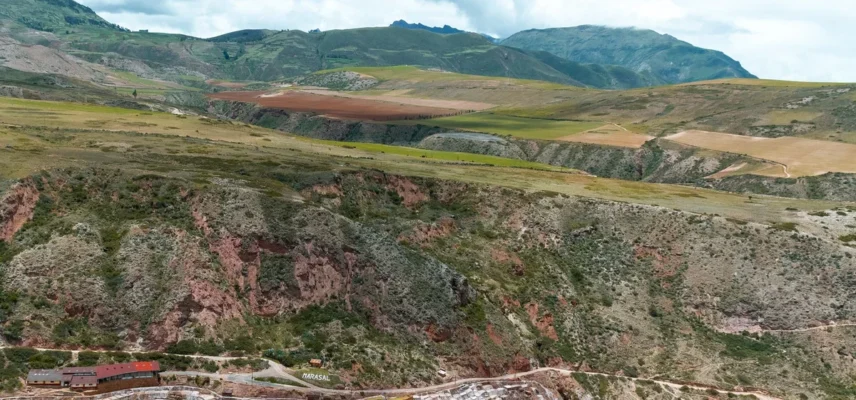
The Maras Salt Mines are another window into the valley’s community economy. These salt terraces, worked since Inca times, continue to be managed by community families under a time-honored cooperative system. Visiting them is a reminder that sustainability is not a modern trend — it is a millennia-old practice in the Andes.
Explore our Sacred Valley treks and adventure options to blend community encounters with the stunning Andean landscape.
Apurímac: Chanka Culture and Untouched Nature
Apurímac is perhaps the least-known region in southern Peru, yet one of the most fascinating for responsible community tourism. This was the land of the Chankas, one of the most significant peoples of the pre-Inca period and essential players in the rise of the Inca Empire. Apurímac’s communities maintain their own cultural traditions, a distinctive local cuisine, and a landscape of deep canyons and cloud forests that remains largely off the beaten path.
Traveling to Apurímac with a local operator means directly supporting communities that rely on responsible tourism to diversify their income and preserve their living heritage. Discover our Apurímac offerings and be part of a journey that very few travelers have made.
Cusco: The Cultural Heart of the Andean World
Cusco, the ancient capital of the Tawantinsuyu (Inca Empire), sitting at approximately 3,400 meters above sea level, is far more than a gateway to Machu Picchu. The city and its surroundings offer a wealth of cultural and community tourism experiences: pottery and weaving workshops in outlying communities, visits to ceremonial sites, and local markets where the Andean economy pulses with a life all its own.
The San Blas neighborhood, San Pedro Market, and the area surrounding Sacsayhuamán offer everyday encounters with the artisans, cooks, and musicians who sustain a vibrant local creative economy. At Parwa Travel, we believe Cusco is best experienced through its streets and communities — not just its ruins. Explore our Cultural Cusco offering to go deeper into this dimension of the journey.
What Does a Community Tourism Experience Include?
Each community designs its own offering based on its resources and traditions. However, most immersive tourism experiences in the Andean highlands of Peru will include:
- Accommodation in family homes or community guesthouses
- Meals prepared with local ingredients using traditional techniques
- Local guides who speak Quechua and know the land firsthand
- Workshops in handicrafts, weaving, pottery, or Andean cuisine
- Participation in seasonal farming activities
- Visits to archaeological sites rarely touched by mass tourism
- Direct cultural exchange with families and community leaders
These experiences can range from a full day to a multi-night stay. The most important thing is to set out with an open mind: you travel to learn, not merely to observe.
Practical Tips for the Responsible Traveler
Before embarking on a community tourism trip in Peru, keep these practical tips in mind — they will make a real difference to your experience:
- Acclimatization: Higher-altitude destinations such as Cusco (3,400 m) and Lake Titicaca (3,812 m) require at least one full day to acclimatize. Drink plenty of water, avoid alcohol, and refrain from strenuous physical activity during the first 24 to 48 hours after arrival.
- Travel Season: The dry season (May to October) is the most recommended time to travel in southern Peru. The rainy season (November to April) may limit access to some communities, but it also brings landscapes of extraordinary visual intensity.
- What to Pack: Warm, layered clothing (Andean nights are cold even in the warmest months), high-SPF sunscreen, a wide-brimmed hat, comfortable footwear, and a reusable water bottle.
- Photography with Respect: Always ask permission before photographing people. In many communities, photographing ceremonies or sacred spaces is not permitted — this must be respected without exception.
- Learn Basic Quechua: A few words such as “Allillanchu” (how are you? — a common everyday greeting) or “Sulpayki” (thank you) in Cusco Quechua go a long way and are warmly appreciated by local communities.
- Buy Local: Purchase handicrafts directly from the communities or at certified local markets. This ensures that the economic benefit reaches the producers rather than middlemen.
Parwa Travel’s Commitment to Andean Communities
At Parwa Travel, community tourism is at the very core of what we do. Our name comes from Quechua: Parwa means “Corn Blossom” — a symbol of life, land, and cultural belonging. We are an agency founded and run from Cusco, with deep roots in Andean culture and the ayllu — the traditional form of community organization in the Andes.
We work with certified local guides, stay in family-run accommodations, and favor community transport whenever possible. Every itinerary we design aims to distribute benefits fairly among local stakeholders: cooks, artisans, transport providers, and host communities.
If you are ready to plan an authentic journey through southern Peru that blends culture, adventure, and responsibility, browse our southern Peru packages or get in touch with us directly. We will help you craft an experience that respects, connects, and transforms.