



Taquile & Amantaní Islands: Sleeping with a Lake Titicaca Community
- 24 de September de 2026
- Parwa Travel
Taquile and Amantaní: when travel becomes togetherness
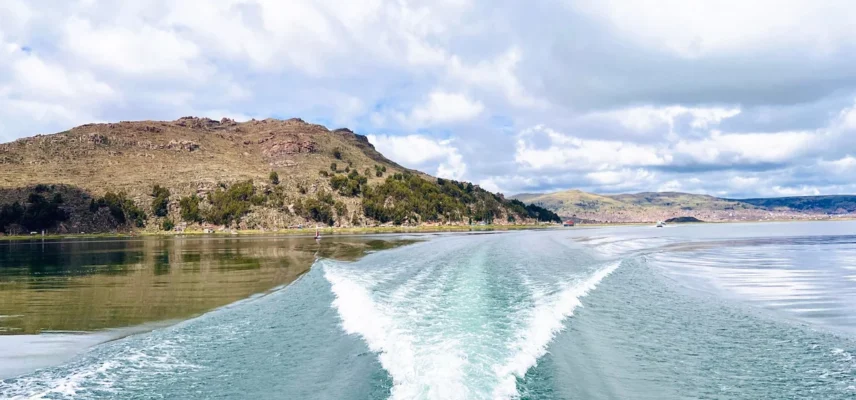
The Lake Titicaca is far more than a mirror of water stretching between Peru and Bolivia. At 3,812 meters above sea level, its waters embrace islands home to living communities — communities proud of their Quechua and Aymara heritage, who for decades have turned hospitality into a form of tourism that honors the land, their beliefs, and the social fabric they’ve built. Taquile and Amantaní are the two most emblematic inhabited islands on the Peruvian side, and spending the night on either one is an experience that fundamentally changes the way you think about travel.
From Puno, the gateway to Lake Titicaca, both islands are reachable by boat. Don’t expect a resort or a glamping retreat — this is about sharing a meal and a roof with local families who run community-based tourism entirely on their own terms. And that is precisely what makes this experience unlike anything else on the continent.
Amantaní Island: a night beneath the starriest sky
Amantaní is the largest island on the Peruvian side of Lake Titicaca, covering roughly 9.28 km². About ten organized communities welcome travelers through a fair rotation system: each host family takes their turn, ensuring that the economic benefits are distributed equitably among all residents.
When you arrive at the dock, a family will be there waiting for you. They’ll take you to their home — built from stone, without frills, with jaw-dropping views of the lake — and share their daily meals with you: hearty soups, native potatoes, quinoa, broad beans. Conversation may be limited by language, but it flows freely through gesture.
In the evenings, the communities usually organize a cultural gathering where travelers are invited to dress in traditional clothing and join in Andean dances. At over 3,800 meters above sea level and far from any light pollution, Amantaní’s night sky is one of the clearest in the entire region — watching the Milky Way from there is a privilege that very few people ever forget.
At the island’s summit stand two sacred hills: Pachatata (Father Earth) and Pachamama (Mother Earth), where pre-Inca temples are preserved and still regarded by the community as active places of worship. The climb takes some effort at altitude, but the panoramic views more than make the journey worthwhile.
What to keep in mind before visiting Amantaní
- There are no ATMs on the island and mobile data is unreliable. Bring enough cash in Peruvian soles.
- Nights can be bitterly cold, especially between May and August. Pack a wool or fleece layer and thermal socks.
- Altitude sickness is a real possibility. Stay well hydrated, walk slowly, and consult your doctor beforehand if you have any heart or respiratory conditions.
- Bringing a small gift for your host family — fruit, candles, or notebooks for the children — is a gesture that is warmly welcomed and deeply appreciated.
Taquile Island: living textile art as cultural heritage
About three hours by boat from Puno, Taquile is an island of roughly 5.72 km², world-renowned for its textile tradition. In 2005, UNESCO declared Taquile’s textile art an Intangible Cultural Heritage of Humanity — a recognition the islanders received with pride, and with a profound sense of responsibility to preserve it.
What sets Taquile apart is not only the beauty of its weavings — chullos (knitted caps), sashes, blankets, and garments bursting with symbolic color — but the fact that it is exclusively the men who weave, while the women are responsible for spinning the thread. Every piece speaks: it tells you the wearer’s marital status, their standing in the community, their origins. These are not souvenirs; they are a visual language centuries in the making.
The island has a remarkable social structure: there is no police force. Disputes are resolved by a council of elders and a system of rotating authorities rooted in Andean principles such as ama suwa, ama llulla, ama quella (do not steal, do not lie, do not be idle) — the very same precepts that governed the Inca Empire. Knowing this before you arrive completely transforms how you see the place.
What a day on Taquile looks like
- The boat arrives at the lower dock, from where you climb a stairway of more than 500 steps up to the main square. A slow, steady pace isn’t optional — the altitude demands it.
- In the square, artisans from the textile cooperative display and sell their work. Buying directly on the island means your money goes straight to the families who made it.
- Community restaurants serve traditional dishes built around lake trout, quinoa, and potato. The food is simple, fresh, and genuinely local.
- Before heading back down to the dock, the view of Lake Titicaca from the island’s natural lookout points offers one of the most memorable landscapes in all of southern Peru.
The Uros Islands: Lake Titicaca’s floating prologue
Most Lake Titicaca circuits include a stop at the floating islands of the Uros before heading on to Taquile or Amantaní. The Uros are communities that live on artificial islands built entirely from totora reeds, an aquatic plant that grows in the lake’s shallow waters. A visit here gives you a window into ancestral ingenuity and one people’s remarkable adaptation to an extreme environment.
While the Uros experience tends to be shorter and more visitor-oriented, pairing it with a night on Amantaní or a full day on Taquile creates a rich, layered story of the different ways of life that coexist across Lake Titicaca. You can find full details about this route in our excursions from Puno section.
Best time to visit and what to expect from the climate
Lake Titicaca can be visited year-round, but conditions vary considerably depending on the season. The dry season runs from May to October, bringing sunny days, very cold nights, and the clear skies that make stargazing from Amantaní so extraordinary. The rainy season spans November to March, with afternoon showers, lusher greenery, and fewer crowds.
For the community stay experience, the dry season is generally the most comfortable — though nights in June and July can dip below freezing. During the wet season, boat crossings can get a bit choppy, but the lake takes on a light and color that many photographers and travelers actually prefer.
What to pack for your island visit
- Layers: a fleece, a windbreaker, and a warm jacket for the nights.
- High-SPF sunscreen. Above 3,800 meters, UV radiation is significantly stronger than at sea level.
- Comfortable shoes with good grip for the stone stairways and dirt paths.
- A reusable water bottle. Help keep single-use plastic off the islands.
- Cash in Peruvian soles. The islands have no electronic payment terminals.
- An open mind and a willingness to disconnect. The point of this experience isn’t comfort — it’s connection.
Community-based tourism: travel that gives back
The tourism model on Taquile and Amantaní isn’t a concession the communities make to visitors — it’s a deliberate political and cultural choice. Historically, both islands have pushed back against outside operators who failed to respect their rules of collective management. When you choose this experience through a responsible agency, you’re opting for a kind of travel that gives back more than it takes.
At Parwa Travel, we work directly with the communities of Lake Titicaca, coordinating with local associations to ensure that every visit respects the rhythms, customs, and well-being of the host families. We don’t improvise — we know the community protocols, and we honor them. If you’d like to include this experience in a broader southern Peru circuit, you’re welcome to browse our southern Peru packages or reach out to us directly to craft an itinerary tailored to you.
Spending the night on Taquile or Amantaní is more than just sleeping somewhere new: it’s understanding that there are ways of living in which the community, the lake, and the land are not the backdrop of the journey — they are its very heart.