


Arequipa in 2 or 3 Days: Itinerary Through the White City
- 21 de September de 2026
- Parwa Travel
Why Visit Arequipa?
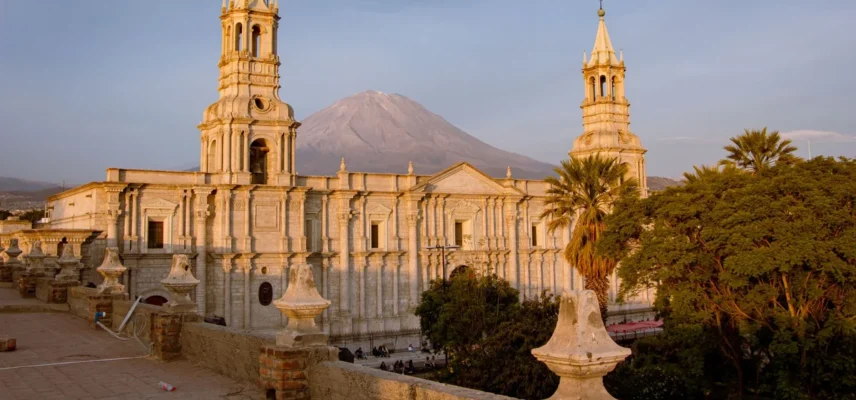
Arequipa is far more than a stopover between Lima and Cusco. The capital of its namesake region and Peru’s second most populous city, it sits at around 2,335 meters above sea level — making it one of the most accessible Andean cities for travelers arriving from sea level with no prior experience at altitude. Towering behind the city is the majestic Misti volcano (5,822 m a.s.l.), a near-perfect cone that dominates the skyline and defines the city’s visual identity.
Its nickname, the White City, comes from sillar: a pinkish-white volcanic rock quarried locally and used to build the churches, mansions, and convents of the colonial era. This unique material gives Arequipa a luminosity that no other Peruvian city can match.
Beyond its architecture, Arequipa is the gateway to the Colca Canyon, one of the deepest canyons on the planet, and it boasts a culinary scene celebrated throughout Peru. Pocatay, rocoto relleno, chupe de camarones — Arequipa’s cuisine has a character all its own and deserves a chapter to itself.
Before You Arrive: Practical Information
- Altitude: 2,335 m a.s.l. Acclimatization is easier here than in Cusco (3,400 m), but if you’re coming from sea level, take it easy on your first day.
- Climate: Dry and sunny for most of the year. The dry season (May to October) brings clear skies — perfect for photographing Misti and visiting the Colca. The rainy season (November to April) brings short downpours, greener landscapes, and fewer tourists.
- What to Pack: High-SPF sunscreen (UV radiation in the highlands is intense), layered clothing, and a warm jacket for the evenings and for the Colca Canyon, where temperatures can drop significantly.
- Getting There: Alfredo Rodríguez Ballón International Airport connects Arequipa with Lima in about 1 hour 20 minutes by air. There are also bus services from Cusco (around 10 hours on a direct route) and from Lima (around 16 hours).
Arequipa 2-Day Itinerary
Day 1 — Historic Center and Santa Catalina Monastery
Start your first day at the Plaza de Armas of Arequipa, declared a UNESCO World Heritage Site along with the historic center in 2000. The cathedral anchoring the square, with its two symmetrical bell towers, is one of the most impressive colonial temples in Peru.
Just a short walk away is the Monastery of Santa Catalina de Siena, founded in 1579. It is a city within a city: more than 20,000 square meters of streets, plazas, cells, and cloisters painted in ochre, indigo blue, and white. Set aside at least two hours to explore it properly. Evening visits, when the monastery opens for night hours, offer a particularly magical atmosphere.
In the afternoon, wander through the San Lázaro neighborhood, the oldest in the city, with its cobblestone alleyways and sillar-stone houses that preserve the look and feel of Arequipa’s earliest colonial years. End the day at one of the restaurants in the Yanahuara district, where you can enjoy traditional Arequipeño cuisine and, if the sky is clear, catch a stunning view of Misti at sunset from the lookout point.
Day 2 — Colca Canyon: Cruz del Cóndor and Andean Villages
The Colca Canyon is approximately 160 kilometers from Arequipa, about a 3-hour drive. Reaching depths of over 3,400 meters in places, it is one of the deepest canyons in the world. Most full-day tours depart very early from the city to make the most of the morning hours, when the Andean condor (Vultur gryphus) rides thermal currents to soar above the canyon.
The most famous viewpoint is Cruz del Cóndor, a lookout perched on the canyon’s rim at around 3,287 meters above sea level. Watching these enormous birds — with wingspans that can exceed 3 meters — glide past at eye level is an experience you won’t easily forget.
On the way there and back, tours typically stop at valley villages such as Chivay, Yanque, and Maca, where you can experience the living culture of the Cabana and Collagua peoples, including their textiles and pre-Hispanic agricultural terraces, some of which are still in use today.
If you’d rather explore this area at a more relaxed pace and in greater depth, consider extending your trip to three days.
Arequipa 3-Day Itinerary: What to Add
A third day lets you spread out your visits more comfortably and add experiences that travelers pressed for time often miss.
Option A: Overnight in the Colca
Instead of doing the Colca Canyon as a single-day trip, spend the night in Chivay or at one of the valley lodges. This way you can visit the La Calera hot springs on arrival, wake up before dawn for Cruz del Cóndor without rushing back on a bus, and enjoy the canyon landscape in the afternoon, when the light is different and the tour groups have long since headed home.
Option B: Andean Sanctuaries Museum and the Juanita Mummy
If you spend Day 2 entirely on a full-day Colca excursion, Day 3 is ideal for visiting the Andean Sanctuaries Museum (UNSA), right in the heart of Arequipa. This is where the Juanita mummy is preserved — an Inca girl discovered in 1995 on the Ampato volcano at over 6,000 meters above sea level. She represents one of the most significant archaeological finds in Peruvian history, and her state of preservation — made possible by the volcano’s ice — is extraordinary. We recommend checking the museum’s current opening hours directly before your visit, as they may vary.
Option C: Trekking in the Colca Canyon
For adventure-minded travelers, the third day can be dedicated to descending to the canyon floor and the oasis of Sangalle, popularly known as “Paradise.” The hike down takes roughly 2 to 3 hours; the return ascent, which is more demanding, can be done on foot or by mule. Check with your agency about trail conditions and the level of effort required before you commit.
Arequipeño Cuisine: Don’t Leave Without Trying These
Arequipa’s food is regarded by many Peruvian chefs as among the most complex and distinctive in the country. The picanterías arequipeñas — traditional eateries historically run by women — have been recognized as Intangible Cultural Heritage of Peru since 2014.
- Rocoto relleno: spicy rocoto pepper stuffed with minced meat, raisins, and egg, baked with melted cheese on top.
- Chupe de camarones: a rich, hearty soup made with river shrimp from the Colca, milk, cheese, and ají panca chili.
- Adobo arequipeño: pork stew marinated in guiñapo chicha (a local fermented corn drink), a classic Sunday breakfast dish.
- Queso helado: a traditional dessert made with cinnamon, coconut, and milk — despite its name (“cheese ice cream”), it contains no cheese at all.
Arequipa as Part of a Southern Peru Circuit
Arequipa fits seamlessly into a southern Peru circuit that includes Cusco, the Sacred Valley, Machu Picchu, and Lake Titicaca in Puno. Many travelers combine Arequipa with a stop in Puno to visit the floating Uros Islands and Taquile Island, as the overland route between the two cities crosses breathtaking altiplano scenery.
If your trip includes more southern destinations, we invite you to browse our southern Peru packages, where we combine Arequipa with Cusco, Puno, and other highlights in itineraries designed to make the most of every day.
You can also explore our excursions from Arequipa if you’ve already sorted your accommodation and are looking to fill specific days with trusted local guides.
Final Tips Before Traveling to Arequipa
- Acclimatization: even though Arequipa is lower than Cusco, if you’re arriving directly from sea level, rest on your first day and drink plenty of water.
- Sun protection: highland sun is stronger than it looks. Use SPF 50 sunscreen or higher and reapply throughout the day.
- Cash: ATM access in the Colca Canyon and the valley villages is limited. Bring Peruvian soles in cash for tips, handicrafts, and incidental expenses.
- Respect for local communities: when visiting Colca villages, ask permission before photographing people and support the local economy by buying handicrafts directly from the artisans who make them.
- Travel insurance: if you plan to trek in the canyon, make sure your policy covers mountain activities and high-altitude evacuation.
At Parwa Travel we’re from Cusco, but southern Peru is our home turf. We know every corner of Arequipa, the Colca, and its communities, and we work with local guides and operators who share our commitment to responsible and sustainable tourism. If you’d like help putting together your perfect itinerary through the White City and beyond, get in touch and we’ll be happy to plan it with you.