

'/%3E%3Cpath%20fill='%23b2b2b2'%20d='M241%20382q0%2016%2017%2026%2017%2011%2042%2011t42-11q16-11%2017-26V269H241'/%3E%3Cpath%20fill='%239f7e00'%20d='M241%20379q0%2014%208%2023%209%209%2021%209%2014%200%2021-9%209-9%209-23V269h-59'/%3E%3Cpath%20d='M241%20339v-70h59v110q0%2014-9%2023l-6%205v-68h-15v72q-8%200-14-4v-68zm59%2040c0%2022%2015%2032%2029%2032%2021%200%2030-18%2030-32v-40h-59'/%3E%3Cpath%20fill='%239f7e00'%20d='M266%20277v5h2v12h-3v-5h2v-5h-9v5h2v5h-4v9h3v18h-5v10h34v-10h-5v-18h3v-9h-4v-5h2v-5h-9v5h2v5h-3v-12h2v-5zm42%20101q0%2010%206%2017%206%206%2015%207%2010-1%2016-7%206-7%206-17v-29h-43'/%3E%3Ccircle%20fill='%230044ad'%20cx='329.5'%20cy='372'%20r='6'/%3E%3Cellipse%20fill='%230044ad'%20cx='300'%20cy='340'%20rx='16'%20ry='21'/%3E%3C/svg%3E)

Inca Trail 2026: When Permits Sell Out and How to Book
- 14 de September de 2026
- Parwa Travel
The Inca Trail and the Permit System: What Every Traveler Needs to Understand
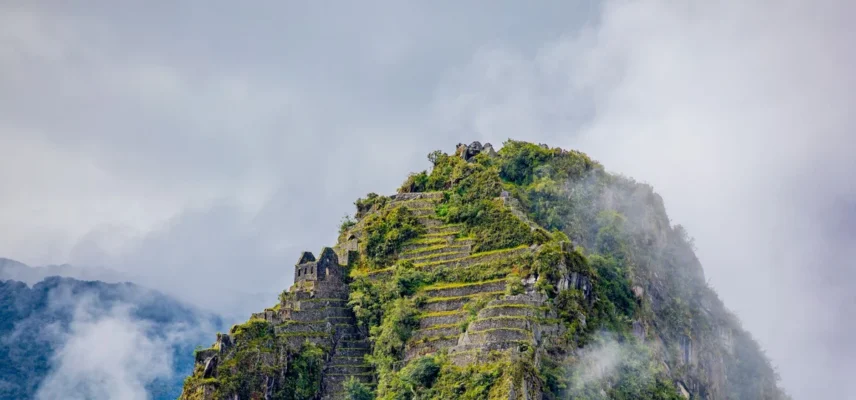
The Classic Inca Trail — the four-day route connecting Kilometer 82 to the Sun Gate and arriving at Machu Picchu — is one of the most sought-after treks in the world. It’s not just a mountain hike: it means walking literally on the stone carved by the engineers of the Tawantinsuyu, crossing high-altitude mountain passes, and arriving at sunrise to the Inca city along the very same path used by Andean pilgrims over five hundred years ago.
It is precisely because of this historical and ecological significance that Peru’s Ministry of Culture regulates access through a system of date-specific limited permits. Each departure date has a maximum quota of people, which includes both trekkers and support staff (guides, porters, and cooks). Once that quota is gone, there is no waitlist or second chance — that date, for that year, is closed.
Understanding how this system works is the difference between hiking the Inca Trail on the date you’ve always dreamed of, or having to rearrange your entire travel itinerary.
How Many Permits Are Available Per Day?
The Ministry of Culture sets a daily limit of 500 people in total for each departure date on the Classic four-day Inca Trail. Of those 500, a significant portion goes to the support team: official guides, porters, and agency staff. The effective quota available to trekkers is considerably smaller.
This limit exists to protect the ecosystem of the Machu Picchu Historical Reserve and to ensure a quality experience along the route. It is a conservation measure, not a commercial restriction — and as responsible travelers, we should respect it and plan accordingly.
For the Short Inca Trail (two days from Kilometer 104), the system works differently and spots tend to be more available, though they also fill up well in advance during peak season.
When Do Permits Open — and When Do They Sell Out for 2026?
Historically, Peru’s Ministry of Culture official platform opens permit sales for the following year during the final months of the current year. In recent years, spots for the most popular dates have sold out within hours of the system going live.
The dates with the highest demand — and the first to sell out — are:
- June, July, and August: peak season, dry weather, and clear Andean skies.
- Weekends in May and September, also in very high demand.
- Special dates such as the June solstice (Inti Raymi), when demand surges dramatically.
Low-season dates (February is the trail’s official closure month for maintenance) have more availability, but the weather can be less predictable. February is the only month the Classic Inca Trail officially closes for maintenance and restoration work.
For 2026, the practical recommendation is to start gathering information and begin the booking process from October or November 2025 if your trip falls during peak season. At Parwa Travel, we monitor the system opening and will let you know as soon as permits become available. Contact us now so we can alert you at exactly the right moment.
Step by Step: How to Book Your 2026 Inca Trail Permit
Permits cannot be purchased individually by travelers directly. The official system requires that bookings be made through an authorized tour operator registered with the Ministry of Culture. This ensures that the guide accompanying you is officially licensed and that porters work under fair, regulated conditions.
- Choose your departure date well in advance. The Classic Inca Trail takes four days and three nights. Your departure date is the day you start at Kilometer 82. Make sure your flight into Cusco arrives at least two days earlier to allow time for acclimatization.
- Choose a licensed tour operator. Only agencies with a valid license can manage permits. Verify that they are registered with the Ministry of Culture and with MINCETUR.
- Provide your passport details. The permit is personal and non-transferable. It is issued in the name of the passport you are traveling with. Any changes afterward may be impossible or very costly.
- Make a payment or deposit to secure your spot. Most agencies require a non-refundable deposit to process the permit as soon as the system allows. The permit fee is set by the Ministry of Culture; check the current rate at the time of your booking.
- Get your booking confirmed in writing. Always request proof of your permit once it has been issued, showing your full name and passport number exactly as they appear in your official document.
Acclimatization in Cusco: The Essential First Step You Can’t Skip
Cusco sits at 3,400 meters (11,150 ft) above sea level, and the highest point on the Classic Inca Trail — Warmiwañusqa Pass, known as “Dead Woman’s Pass” — rises above 4,200 meters (13,780 ft). Flying into Cusco and heading straight out on the trek the next day is one of the most common — and costly — mistakes travelers make.
We recommend spending at least two nights in Cusco before starting the Inca Trail. During that time, you can explore the city, visit nearby archaeological sites, and give your body the chance to adjust to the altitude. Discover more about what to do in Cusco during those days leading up to your trek.
Common symptoms of altitude sickness (soroche) include headaches, nausea, fatigue, and dizziness. Coca tea is a traditional Andean remedy that is widely used throughout the region. If symptoms are severe, consult a local doctor.
What’s Included in the Inca Trail with a Tour Operator?
A complete Inca Trail package with a responsible agency should include, at a minimum:
- Official trail entry permit issued in your name
- A certified official guide with expertise in Inca culture and the natural environment
- Porters working under fair, regulated conditions (weight limits enforced, protective gear, meals, and insurance provided)
- All meals during the trek (breakfast, lunch, dinner, and snacks)
- Sleeping tent and camping equipment
- First aid kit and emergency supplemental oxygen
- Transportation to the starting point (Km 82) and return from Aguas Calientes (Machupicchu Pueblo)
At Parwa Travel, we work with porters from local communities, ensuring dignified working conditions and directly supporting the livelihoods of the families who make this experience possible. We believe your journey should be fair for everyone involved — not just unforgettable for you.
Beyond the Classic: Other Inca Routes That Also Require Planning Ahead
If permits for the Classic four-day Inca Trail are already sold out for your dates, there are equally remarkable alternatives that also deserve advance planning:
- Short Inca Trail (2 days): Departs from Kilometer 104, passes through the Chachabamba archaeological site, and arrives at Machu Picchu via the Sun Gate. Requires a separate permit.
- Salkantay Trek (5 days): The most popular alternative route. It does not require a Ministry of Culture permit for the trail itself, though a Machu Picchu entrance ticket is still needed. Features stunning glacier and cloud forest scenery.
- Lares Trek: A more culturally immersive and less-traveled route that winds through living Quechua communities in the Sacred Valley. Perfect for travelers seeking genuine human connection alongside breathtaking nature.
You can explore all of these options in our Treks & Adventure section, where you’ll find the detailed itineraries we operate out of Cusco.
Practical Tips to Get Ready for the Inca Trail
What to Pack
- Waterproof trekking boots that are already broken in (never wear brand-new boots on the trail)
- Layered clothing: temperatures can drop below 0 °C (32 °F) at high-altitude campsites
- Poncho or rain jacket (even during dry season, afternoon showers can catch you off guard)
- Sunscreen and sunglasses (UV radiation at altitude is intense)
- Trekking poles (highly recommended for the descents)
- Water bottle or filtration system
- Headlamp for early morning starts at camp
Recommended Fitness Level
The Inca Trail is a challenge, but you don’t need to be an elite athlete to complete it. The second day is the most demanding, with the climb to Warmiwañusqa Pass at 4,215 meters (13,828 ft). What matters most is a reasonable level of cardiovascular fitness and, above all, proper acclimatization before you set off.
Book Your 2026 Inca Trail with Parwa Travel
We are a Cusco-born agency, built in Cusco, operating from Cusco. We know the Inca Trail not as a tourism product, but as part of our history and our identity as an Andean people. When you walk with us, you walk with guides who carry this path in their collective memory.
Don’t wait until the permits are gone. Get in touch today and we’ll help you plan your 2026 Inca Trail experience with time to spare, with care, and with the insider knowledge that only comes from calling this place home. You can also browse our southern Peru packages to combine the trek with other extraordinary destinations such as Lake Titicaca or the Colca Canyon.