
'/%3E%3Cpath%20fill='%23b2b2b2'%20d='M241%20382q0%2016%2017%2026%2017%2011%2042%2011t42-11q16-11%2017-26V269H241'/%3E%3Cpath%20fill='%239f7e00'%20d='M241%20379q0%2014%208%2023%209%209%2021%209%2014%200%2021-9%209-9%209-23V269h-59'/%3E%3Cpath%20d='M241%20339v-70h59v110q0%2014-9%2023l-6%205v-68h-15v72q-8%200-14-4v-68zm59%2040c0%2022%2015%2032%2029%2032%2021%200%2030-18%2030-32v-40h-59'/%3E%3Cpath%20fill='%239f7e00'%20d='M266%20277v5h2v12h-3v-5h2v-5h-9v5h2v5h-4v9h3v18h-5v10h34v-10h-5v-18h3v-9h-4v-5h2v-5h-9v5h2v5h-3v-12h2v-5zm42%20101q0%2010%206%2017%206%206%2015%207%2010-1%2016-7%206-7%206-17v-29h-43'/%3E%3Ccircle%20fill='%230044ad'%20cx='329.5'%20cy='372'%20r='6'/%3E%3Cellipse%20fill='%230044ad'%20cx='300'%20cy='340'%20rx='16'%20ry='21'/%3E%3C/svg%3E)

Tips for Your First Trip to Cusco: A Practical Guide
- 12 de September de 2026
- Parwa Travel
Your First Trip to Cusco: What Nobody Tells You Before You Arrive
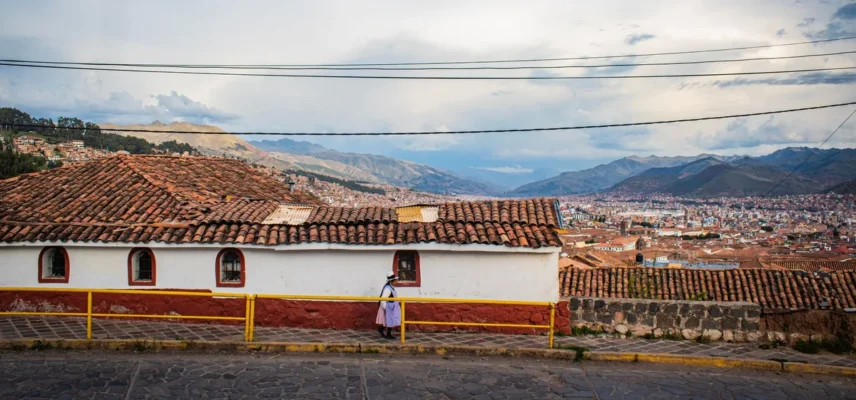
Cusco, known in Quechua as Qosqo — meaning “navel of the world” — was the capital of the Tawantinsuyu, the Inca Empire. Today it is a living city where colonial stonework, pre-Hispanic temples, and Andean culture coexist, still deeply present in every market, plaza, and ritual. If this is your first trip to Cusco, this guide covers the key points to help you arrive ready and get the most out of your visit.
The First Thing You Need to Know: Altitude
Cusco sits at approximately 3,400 meters (11,150 ft) above sea level. That’s not a minor detail — it’s the factor that catches first-time visitors most off guard. Altitude sickness (known locally as soroche) can show up as headaches, fatigue, dizziness, or loss of appetite during your first hours or days in the city.
The good news is that with a little care, most people adjust without serious trouble. Here are the most effective recommendations:
- Rest during your first few hours after arriving. Don’t plan any strenuous activities on day one.
- Stay well hydrated. Drink water frequently and cut back on alcohol during the first few days.
- Try coca tea (mate de coca). This traditional Andean herbal infusion is one of the most widely used and locally accepted remedies for soroche. Most hotels offer it at check-in.
- Talk to your doctor before traveling if you have any cardiorespiratory conditions or if you’d like to take preventive medication such as acetazolamide.
- Eat light during your first meals. Heavy or fatty dishes can make altitude symptoms worse.
If you’re flying in from Lima, keep in mind that the change in altitude is abrupt: Lima is virtually at sea level while Cusco sits above 3,400 m. Some travelers prefer to make a stopover in Arequipa (2,335 m / 7,660 ft) to acclimatize gradually. Get in touch with us to explore itinerary options that match your pace.
When to Visit Cusco: Weather and Seasons
Cusco has two well-defined seasons: the dry season (May through October) and the rainy season (November through April). Both have their own advantages.
Dry Season (May – October)
This is the most popular time to visit Cusco and the surrounding region. Days are sunny, the vivid blue skies are perfect for photography, and conditions for trekking are ideal. June is especially exciting thanks to the Inti Raymi festival — the Festival of the Sun — held every June 24th at the Sacsayhuamán fortress.
Rainy Season (November – April)
Rain typically falls in the afternoons and rarely disrupts travel plans. The city and the Sacred Valley turn a lush, deep green, prices tend to be more affordable, and the archaeological sites are far less crowded. That said, some trekking routes may have restrictions due to trail conditions, so it’s worth checking the status of the paths before you head out.
What to Pack
The weather in Cusco can change considerably throughout a single day: cold mornings, warm middays, and cool evenings. Packing smart makes the difference between comfort and shivering.
- Layered clothing: thermal base layers, fleece or wool sweaters, and a lightweight waterproof jacket.
- Comfortable, sturdy footwear: essential for walking on the uneven cobblestones of the historic center and archaeological sites.
- High-SPF sunscreen: UV radiation at altitude is significantly stronger than at sea level. Use SPF 50 or higher.
- Lip balm and sunglasses: a must-have for the same reason.
- Reusable water bottle: staying hydrated is key for acclimatization — and it helps cut down on single-use plastic.
- Basic medications: pain relievers, anti-diarrheal medicine, and any personal prescription drugs.
- Soles in cash: while many establishments accept cards, cash is still essential at markets, local communities, and for public transport.
Getting Around Cusco
Cusco’s historic center is compact and very walkable. In fact, exploring on foot is the best way to discover its cobblestone alleyways, colonial churches built on Inca foundations, and lively plazas. The Plaza de Armas and the San Blas neighborhood are great places to start getting your bearings.
To reach the nearby archaeological sites — such as Sacsayhuamán, Q’enqo, Puca Pucara, and Tambomachay — you can grab a taxi, join a guided tour, or take a shared minibus (colectivo). Taxis in Cusco generally don’t use meters, so always agree on the fare before you get in.
For destinations like Machu Picchu or the Sacred Valley, access is by train, bus, and/or on foot depending on your chosen route. Check out our excursions for organized options suited to every type of traveler.
Places You Can’t Miss
Cusco alone — along with its immediate surroundings — can easily fill several days of exploration. Here are the must-sees for a first visit:
- Machu Picchu: The world’s most famous Inca citadel, nestled at around 2,430 m (7,970 ft) between the Andes and the high jungle. Advance planning is essential for entrance tickets and transportation. Check availability directly with us at Cusco Cultural.
- Sacsayhuamán: A commanding Inca archaeological complex perched right above the city at around 3,700 m (12,140 ft). Its massive stone walls fit together with a precision that still baffles modern engineers.
- Sacred Valley of the Incas: The corridor between Pisac and Ollantaytambo is home to markets, agricultural terraces, ruins, and living communities. It’s an essential visit and the starting point for several trekking routes. Explore our options at Treks & Adventure.
- Qorikancha: The Temple of the Sun — one of the most sacred sites in the Inca Empire. The Spanish built the Convent of Santo Domingo on top of its foundations, yet the perfectly preserved Inca walls are still visible to this day.
- San Pedro Market: Cusco’s central market. Andean fruits, fresh juices, textiles, medicinal herbs, and the heartbeat of everyday city life. An authentic experience you won’t want to skip.
Cultural Tips That Make a Real Difference
Traveling to Cusco is also an encounter with a living Quechua and Andean culture that deserves genuine respect — not just a photo opportunity. A few key points to keep in mind:
- Always ask permission before photographing someone — especially in communities or markets. It’s a basic sign of respect.
- Learn a few words of Quechua: Allianchu (How are you?), Allinmi (I’m doing well), Yusulpayki (Thank you). These small gestures open doors to real, immediate connections.
- Buy handicrafts directly from the makers or at local artisan markets. That way, the economic benefit goes to the people who truly deserve it.
- Respect the archaeological sites: don’t climb on the structures, don’t move stones, and stick to the marked paths.
Plan Your Trip with Parwa Travel
At Parwa Travel, we are Cusqueños — we know every corner of this land with pride and a deep sense of responsibility. We don’t do generic packages: we design experiences that connect travelers with the history, nature, and people of the Andes in an authentic and sustainable way.
If you’re planning your first trip to Cusco, we can help you put together an itinerary tailored to your schedule, interests, and budget. Browse our southern Peru packages or write to us directly for a free, no-commitment personalized consultation.