



Peru with Kids: Family Destinations and Activities
- 1 de October de 2026
- Parwa Travel
Why Is Peru a Great Destination for Families?
Peru is one of the world’s most well-rounded destinations for family travel with kids. In a single trip, you can take in the living history of the Inca Empire, ecosystems ranging from coastal desert to Andean highlands, and a cuisine recognized the world over. This isn’t just about seeing beautiful places — it’s about kids growing up knowing they’re part of a bigger, more diverse world.
From Cusco, the ancient capital of the Tawantinsuyu, to the mysterious Nazca Lines and the floating islands of Lake Titicaca, every destination offers something no textbook can replicate. Traveling with kids through southern Peru is, in a word, experiential education in its purest form.
That said, a successful family trip takes planning. Altitude, weather, and travel times are factors that can make the difference between a memorable adventure and an exhausting one. In this guide, you’ll find everything you need to organize your family adventure in southern Peru.
Top Destinations for Traveling with Kids in Southern Peru
1. Cusco: Inca History Within Every Child’s Reach
Cusco is the heart of any southern Peru itinerary, and a destination that captivates kids and adults alike. The city sits at roughly 3,400 meters (11,150 ft) above sea level, so acclimatization is the first step: plan to spend your first one or two days resting, staying well hydrated, and avoiding strenuous activities before you start exploring.
Cusco’s historic center is an open history book. The cobblestone streets of San Blas, the sweeping Plaza de Armas, and the perfectly fitted Inca stone walls spark genuine curiosity in children: How did they move such heavy stones without cranes? What did the Incas eat? What language did they speak? Those questions are the best jumping-off point for learning together.
The fortress of Sacsayhuamán, perched on the hills above the city, is especially family-friendly: the wide open space lets kids run, explore, and touch the massive stone blocks while a specialist guide brings the history to life. The walk up is moderately demanding, so it’s best tackled once you’re well acclimatized.
2. Sacred Valley: Nature, Markets, and Adventure
The Sacred Valley of the Incas, stretching between Cusco and Machu Picchu at a lower elevation (roughly 2,700–3,000 meters / 8,900–9,800 ft), is ideal for families with young children or those who are sensitive to altitude. The climate is milder, and the landscape — carved by the Urubamba River — is breathtaking in the most effortless way.
Pisac and Ollantaytambo are the two must-see stops. In Pisac, the Sunday market is a vibrant, living space where kids can interact with local artisans, admire brilliantly colored textiles, and sample Andean fruits. In Ollantaytambo, the standing Inca citadel is one of the best-preserved in Peru: climbing its terraces is a mini-adventure that kids absolutely love.
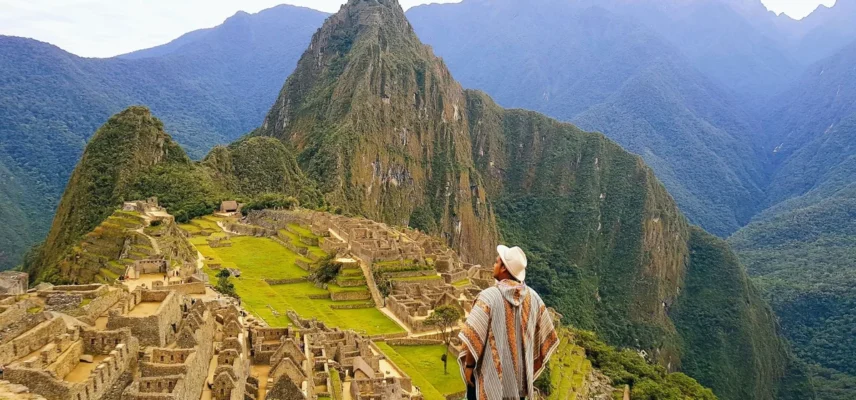
Trains from the Sacred Valley also run to Machu Picchu, the world’s most famous Inca citadel, which is entirely doable as a family with the right planning. For a visit to Machu Picchu with kids, set off early, bring snacks and water, pack layers for the chilly morning, and don’t forget sunscreen for midday. Ticket availability and access conditions should be checked in advance through official sources or your travel agency.
3. Puno and Lake Titicaca: An Experience You’ll Never Forget
Puno sits on the shores of Lake Titicaca at 3,812 meters (12,507 ft) above sea level — the highest point on this route. Acclimatizing beforehand is essential, especially if you’re traveling with children under five. If you have any concerns about altitude tolerance, consult your doctor before the trip.
The Uros Floating Islands are, without a doubt, one of the most awe-inspiring experiences for children. These islands are built entirely from layers of totora reed, an aquatic plant that grows in the lake. Members of the Uro community explain how the islands are constructed, how daily life works, and how they get around. For kids, the idea of actually living on a floating island sounds like something out of a storybook.
Taquile Island, home to a Quechua community with centuries of weaving tradition recognized by UNESCO, offers an authentic community tourism experience. The men of Taquile are the weavers, and the community’s collective way of life (the ayllu system) delivers life lessons that no classroom ever could.
4. Ica and Nazca: Desert, Adventure, and Mystery
The contrast between the Andes and Peru’s Pacific coast never fails to amaze visiting families. The Ica and Nazca region offers a desert landscape that feels almost otherworldly to children: enormous sand dunes, the Huacachina oasis, and the chance to try sandboarding (riding a board down the dunes) or dune buggy rides.
The Nazca Lines — geoglyphs etched into the desert over 1,500 years ago by the Nazca culture — are best appreciated from the air. Scenic flights in small aircraft are a thrill for older kids, though it’s worth considering whether younger children or those prone to motion sickness are ready for the experience. On the ground, the Mirador Tower lets you spot several figures without leaving terra firma.
Ica is also the gateway to Peru’s pisco and wine culture, though that part of the visit is squarely for the grown-ups. For kids, the real draw is the desert itself — the wind, the dunes, and the sense of discovering a world utterly different from the Andes.
5. Lima: Food, Museums, and a City to Explore
Most trips to southern Peru begin or end in Lima, the capital. The city offers world-class culture and cuisine, and for families with children it’s a great landing pad and acclimatization point before heading up into the Andes.
The Larco Museum, with its extraordinary collection of pre-Columbian ceramics, and the Parque de la Reserva with its spectacular illuminated fountain circuit are consistently among families’ top-rated experiences. The Miraflores neighborhood — with its clifftop parks overlooking the Pacific and its breezy boardwalk — is safe and pleasant for a stroll with kids. Lima’s globally celebrated food scene is an adventure in itself: ceviche, causa, and picarones are dishes that children tend to fall in love with immediately.
Practical Tips for Traveling to Peru with Kids
Altitude: The Most Important Factor
Altitude is the number-one thing to plan around when traveling with children to southern Peru. Altitude sickness, or soroche, can affect anyone regardless of age or fitness level. Some general tips:
- Spend your first days in Cusco (3,400 m / 11,150 ft) doing low-key, short activities.
- Keep kids well hydrated — water is your best weapon against soroche.
- Coca tea is a widely used traditional Andean remedy for relieving altitude symptoms in adults; consult your doctor before giving it to children.
- If a child shows severe symptoms (intense headache, vomiting, difficulty breathing), descending to a lower altitude is the right call.
- Check in with your family doctor before the trip, especially if any children are under five years old.
Best Time of Year for a Family Trip
Southern Peru has two well-defined seasons. The dry season runs from May to October and is the most recommended time for family travel: clear skies, dry trails, and excellent visibility at every site. The rainy season runs from November to April, with heavier rainfall between January and March. Traveling in the low season has its perks — smaller crowds and lower prices — but pack for afternoon showers.
What to Pack
- Layered clothing: cold mornings, warm afternoons, and very cold Andean nights.
- High-SPF sunscreen (UV radiation is significantly stronger at altitude).
- Insect repellent (especially if you’re visiting lower-lying areas or the jungle).
- Sturdy, comfortable footwear for walking archaeological sites.
- A basic first-aid kit with headache and stomach remedies.
- Healthy snacks for long transfers and extended visits.
- Valid ID documents for all minors (passport or national ID depending on nationality).
Travel Times Between Destinations
Getting between destinations in southern Peru can take a while. Cusco to Puno, for example, is roughly 6 hours by tourist bus or just over an hour by train. Ica to Lima is about 4 hours by bus. It’s important to build in breathing room, avoid overstuffed itineraries, and plan rest stops when traveling with young children. At Parwa Travel, we design itineraries tailored to the family pace — with the downtime you actually need.
Recommended Activities by Age
For Kids Ages 4–7
- Boat ride to the Uros Floating Islands on Lake Titicaca.
- Visit to the Pisac market and hands-on time with local artisans.
- Walking exploration of Cusco’s historic center.
- Dune buggy ride through the Huacachina dunes (check minimum age with the operator).
For Kids Ages 8–12
- Visit to Machu Picchu with a hike through the citadel’s internal circuits.
- Sandboarding on the Ica dunes.
- Bike tour through the Sacred Valley.
- Pottery or weaving workshop with local communities near Cusco.
For Teenagers
- Trekking in the Sacred Valley or hiking routes around Cusco.
- Scenic flight over the Nazca Lines.
- Community tourism experience on Taquile Island or in Colca communities.
- White-water rafting on the Urubamba River (check difficulty level and minimum age with the operator).
Plan Your Family Trip with Parwa Travel
At Parwa Travel, we’re a Cusco-based agency specializing in southern Peru, with deep local knowledge of every route, community, and attraction featured in this guide. We craft family travel packages with flexible itineraries, bilingual local guides, and a carefully curated selection of services that respect both the environment and the communities we visit.
We know that traveling with kids calls for extra planning, patience, and operators you can truly trust. If you’re ready to start organizing your family trip to Peru, get in touch and tell us about your travelers: their ages, interests, and how much time you have. With that, we’ll build an experience together that every member of your family will remember for years to come.